

The Essential DIY Checklist
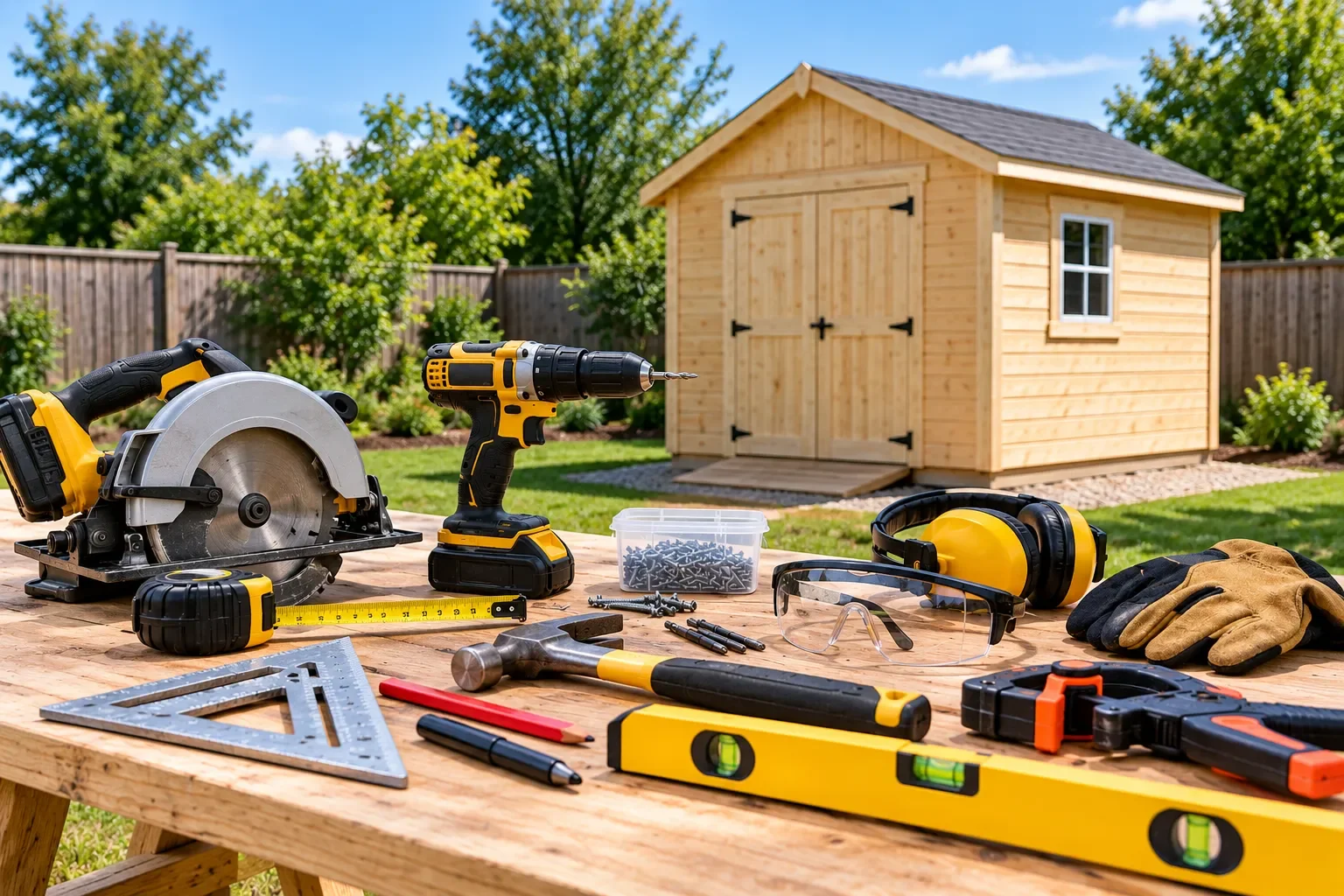
Building a shed yourself can save money and give you a space designed around your needs. But before you start cutting lumber or assembling the frame, it helps to know which tools you will actually need.
The good news is that you don't need a professional workshop to build a basic backyard shed. A reliable set of measuring tools, a few essential hand and power tools, and the right safety equipment will cover many common DIY shed projects.
The exact tools depend on your shed plans, construction materials and experience. Use this checklist to prepare for your project without buying equipment you may only use once.
1. Measuring and Layout Tools
Accurate measurements are essential when building a shed. Small errors during layout can create problems later when fitting wall frames, roof components, doors and windows.
Start with these tools:
Tape measure: For measuring lumber, marking wall lengths and checking dimensions against your plans.
Framing square or speed square: Helps mark square lines, check corners and lay out framing cuts.
Spirit level: Checks that the foundation, floor frame, walls and other components are level or plumb where required.
Chalk line: Useful for marking long, straight lines across plywood, sheathing and framing materials.
Pencils and marking tools: For marking cut lines and identifying components before assembly.
Take measurements directly from your shed plans and double-check them before cutting. Accurate layout at the beginning can save material and reduce rework.
2. Cutting and Framing Tools
Most traditional wood-framed sheds require lumber to be cut to specific lengths and assembled into a floor, walls and roof.
Common tools include:
Circular saw: Useful for cutting framing lumber, plywood and other sheet materials when the blade and setup are suitable for the job.
Hand saw: Handy for small cuts and situations where a powered saw isn't necessary.
Hammer: Used for driving nails and completing various framing tasks.
Clamps: Hold pieces together while you position, align or fasten them.
Work supports or sawhorses: Provide a stable place to support lumber and sheet materials while cutting.
A circular saw is a useful tool for many DIY shed builds, but it isn't the only option. Depending on the design, material and cuts required, you may be able to use a different suitable saw or borrow one.
Always support the material properly, follow the tool manufacturer's instructions and keep hands clear of the cutting path.
3. Drilling, Driving and Fastening Tools
Shed construction involves joining framing members, attaching sheathing and installing various hardware components.
Useful tools include:
Cordless drill and driver: For drilling pilot holes and driving compatible screws.
Drill bits and driver bits: Choose the correct type and size for the fasteners and materials you're using.
Nail set or suitable fastening tools: Depending on your plans, you may use nails, screws or specified connectors.
Wrenches or socket set: Useful when your shed design includes bolts or other hardware that requires tightening.
Utility knife: Helpful for opening packaging and making suitable trimming cuts in compatible materials.
Check your plans before choosing fasteners. Nails, structural screws and metal connectors are not automatically interchangeable. Use the type and size specified for the connection.
4. Tools for Roofing, Siding and Finishing
Once the main structure is assembled, you may need additional tools to install siding, roofing, doors, windows and trim.
Depending on your shed design, these may include:
Tin snips or roofing-specific cutting tools: For suitable metal components when the material manufacturer recommends them.
Roofing knife: For cutting compatible roofing materials.
Caulking gun: For applying specified sealants around suitable joints and openings.
Paintbrushes and rollers: For applying compatible paint, stain or protective finishes.
Extension ladder or suitable access equipment: For reaching elevated areas safely.
Not every shed needs every tool on this list. A metal-roofed shed, for example, may require different cutting equipment from a shed with asphalt shingles. Check the roofing and siding instructions before buying specialised tools.
5. Safety Equipment You Shouldn't Skip
Safety equipment belongs on your shopping list before construction begins.
Depending on the work and tools involved, you may need:
Safety glasses or goggles to protect your eyes.
Hearing protection when using noisy power tools.
Suitable work gloves for handling rough materials, where appropriate.
Sturdy, closed-toe footwear.
A suitable dust mask or respirator when required by the material and task.
Appropriate fall protection and safe access equipment for elevated work.
Read the instructions for each tool and material. Keep the work area clear, secure materials before cutting, and never remove guards or bypass safety features. Follow the relevant safety guidance for electrical tools, dust, ladders and roofing work.
6. Essential Tools vs. Optional Tools
If you're building your first shed, it's easy to assume you need every tool mentioned in a construction guide. In reality, the best starting point is the list required by your specific plans.
Prioritise first:
Tape measure, square and level.
A suitable saw for the planned cuts.
Hammer and/or the appropriate drill and driver.
Clamps and stable work supports.
Required safety equipment.
Consider borrowing or renting:
Specialised saws or cutting equipment.
Tools needed for only one stage of the build.
Equipment for particular roofing or finishing materials.
Larger tools that would be expensive to purchase for a single project.
Before hiring or borrowing equipment, check that it is suitable for the task and that you know how to use it safely. If your shed comes as a kit, review the manufacturer's tool list first; some kits require different tools from a traditional timber-framed shed.
7. Your Shed-Building Tool Checklist
Use this checklist to prepare before work begins.
Tape measure
Framing square or speed square
Spirit level
Pencil and marking tools
Circular saw or other suitable saw
Hammer
Cordless drill and driver
Appropriate drill bits and driver bits
Clamps and work supports
Fasteners and connectors specified by your plans
Safety glasses and hearing protection
Suitable footwear and task-specific protective equipment
Any additional tools required for your roofing, siding and finish
Review your plans and remove items that don't apply to your design. Add any specialised equipment required by your materials or construction method.
8. Prepare Before You Start Building
Having the right tools is only one part of a successful shed project. You also need a suitable location, a correctly prepared foundation, accurate material quantities and a clear construction sequence.
Start with The Shed Nerd's Shed Building Guide to work through the planning and building stages. You can also use the Shed Material Estimator Calculator to estimate materials for a project based on your selected dimensions and options.
Before construction, confirm local permit requirements, property setbacks and any applicable building rules. Follow your chosen plans and the instructions supplied with your materials.
Final Thoughts
The tools needed to build a shed don't have to cost a fortune. Start with accurate measuring equipment, suitable cutting and fastening tools, and the right safety gear. Then add or hire specialised equipment only when your plans call for it.
With a practical checklist and a well-organised building plan, you can prepare for your shed project with greater confidence and avoid buying tools you don't need.