

For a Lawn Mower
A wooden shed ramp makes it easier to move lawn mowers, wheelbarrows, and garden equipment in and out of your storage shed. Without one, even a small step between the ground and the shed floor can make moving heavy equipment awkward.
If you're wondering how to build a shed ramp, the process starts with measuring the entrance, choosing a suitable slope, and building a sturdy frame that can support your equipment.
This guide explains how to plan and construct a wooden shed ramp, including important differences between ramps for push mowers and riding lawn mowers.
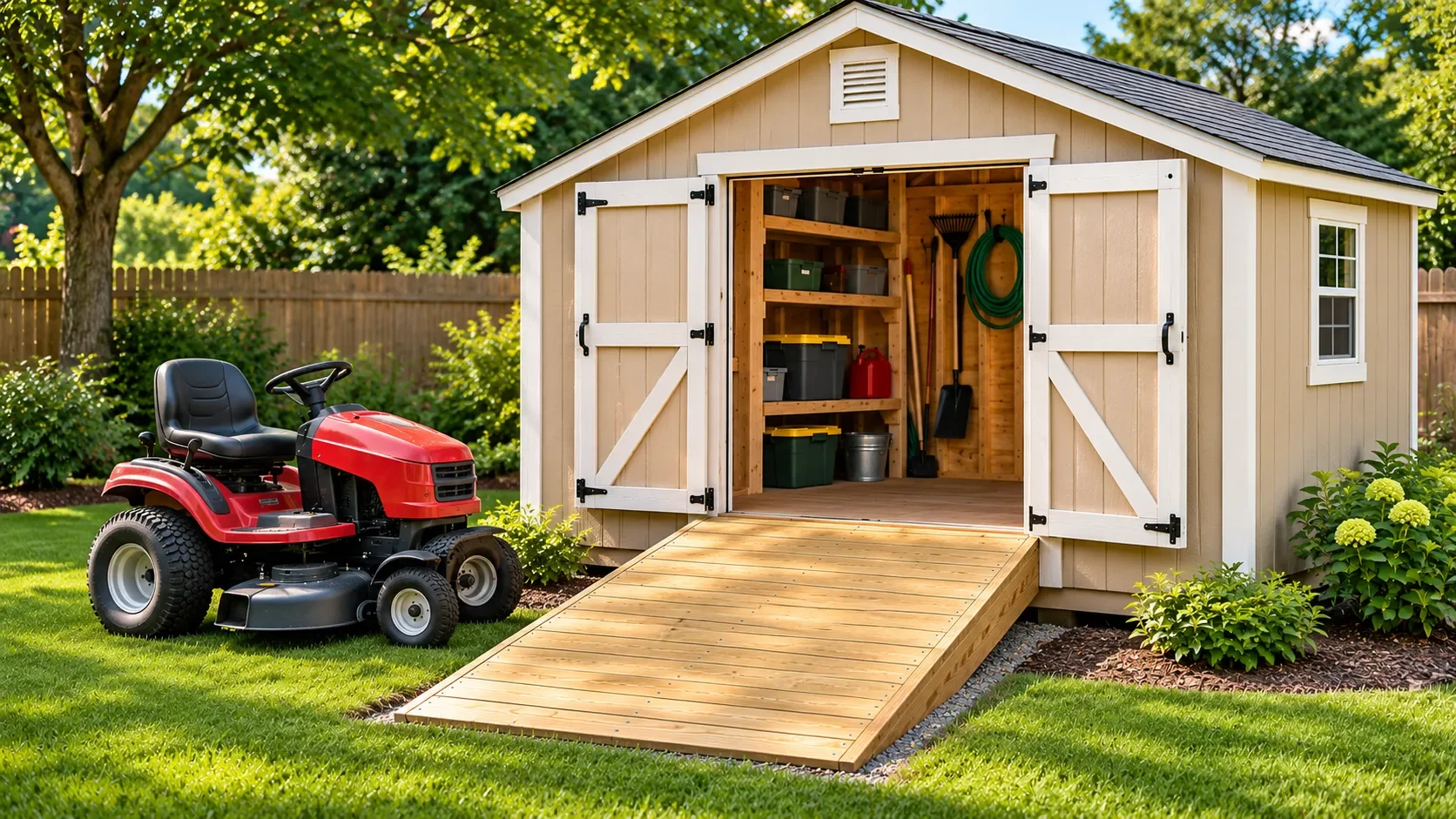
1. Measure Your Shed Entrance
Before buying lumber, measure the height from the finished ground surface to the top of your shed floor.
This measurement is called the ramp rise.
Next, measure the clear width of your shed doorway. The ramp needs to accommodate the equipment passing through it, with enough clearance for wheels and safe handling.
Also check the ground in front of the shed. You'll need enough space for the ramp and a suitable approach area.
If the ground slopes away from the building, take measurements at the proposed lower end of the ramp rather than assuming the yard is level.
2. Calculate the Shed Ramp Slope
Ramp slope is one of the most important parts of the design.
A steep ramp can make equipment difficult to control, reduce traction, or cause a lawn mower to scrape underneath.
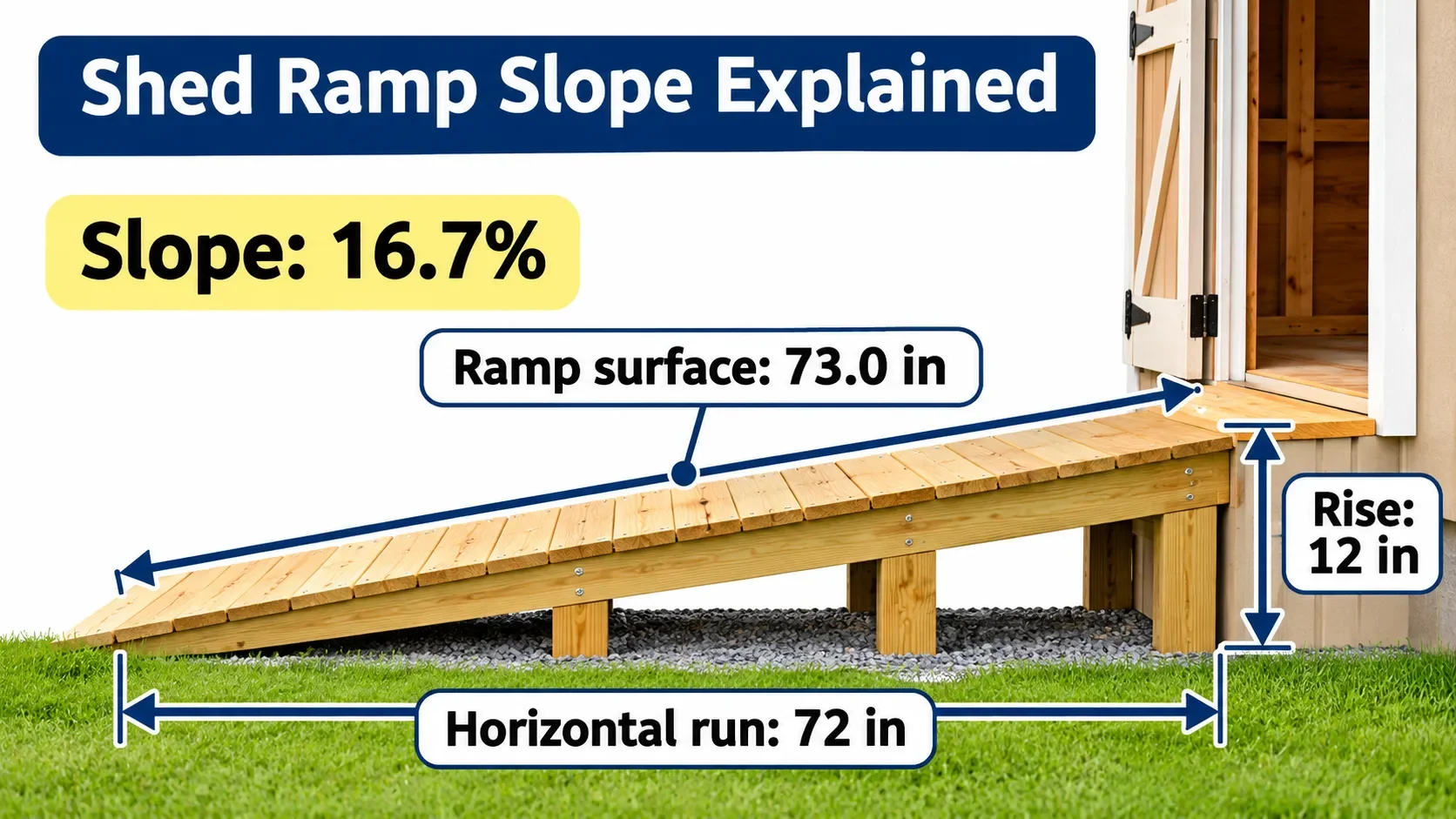
To calculate the slope, divide the ramp rise by the horizontal run, then multiply by 100.
Slope (%) = Rise ÷ Horizontal Run × 100
For example, if your shed floor is 12 inches above the ground and the ramp extends 72 inches horizontally, the slope is approximately 16.7%.
Here are four examples:
6-inch rise with a 72-inch run: 8.3% slope.
9-inch rise with a 72-inch run: 12.5% slope.
12-inch rise with a 72-inch run: 16.7% slope.
12-inch rise with a 96-inch run: 12.5% slope.
Notice how increasing the ramp's horizontal run reduces the slope.
These figures are for planning purposes only. They don't establish a safe slope for every lawn mower. Always check the equipment manufacturer's instructions, ground clearance, traction, and load requirements before using a ramp.
3. Choose Materials for Your Wooden Shed Ramp
For a typical wooden shed ramp, materials may include:
Exterior-rated, ground-contact pressure-treated lumber where required.
Structural framing lumber sized for the ramp span and expected load.
Exterior-rated decking boards or another suitable traction surface.
Corrosion-resistant structural connectors and fasteners approved for treated lumber.
Suitable supports or footings beneath the ramp.
Gravel or another appropriate base material for drainage.
Exterior-rated traction strips or a compatible anti-slip surface.
The required lumber sizes and spacing depend on the ramp's dimensions, support arrangement, and load. Don't assume that a particular board size will safely support a riding mower without checking its structural capacity.
For equipment ramps, the load must include the mower, operator where applicable, attachments, and the effects of moving equipment.
4. Prepare the Ground and Supports
A wooden ramp needs a stable base.
Remove vegetation and loose material from the area where the ramp will sit. Check for soft soil, standing water, and drainage problems.
Where appropriate, install a compacted gravel base beneath the lower supports. Use properly designed footings or supports where soil conditions and loads require them.
Keep wood away from standing water, and use materials rated for the amount of ground contact they'll experience.
The upper end of the ramp must also have a secure, load-bearing connection or support at the shed entrance. Don't rely on the shed's siding or trim to carry the ramp.
5. Build the Ramp Frame
Once you've confirmed the dimensions and structural requirements, you can assemble the frame.
Step 1: Mark the ramp layout. Mark the planned width, lower landing position, and support locations.
Step 2: Cut the framing members. Cut the sloping supports to the required dimensions, allowing for the finished decking thickness and the transition at the shed floor.
Step 3: Assemble the frame. Install the framing members and cross-bracing specified by your design. Keep the frame square and ensure each member is adequately supported.
Step 4: Install the supports. Position the frame on its prepared supports, checking that it doesn't rock or twist.
Step 5: Secure the upper connection. Use a connection suitable for the expected loads and the shed's structural framing.
Before installing decking, inspect the complete frame for movement, unsupported spans, and poorly seated connections.
If you're building a ramp for a riding lawn mower, use a load-rated design reviewed for your equipment rather than relying on generic framing dimensions.
6. Install the Ramp Decking
Decking creates the surface that the mower wheels travel across.
Install exterior-rated boards or another suitable surface according to the structural design. Fasten them securely and leave appropriate drainage gaps where required by the material.
Avoid protruding screw heads, sharp edges, or loose boards.
Pay particular attention to the transitions at both ends of the ramp.
At the shed doorway, the change in height should be smooth enough to avoid catching mower wheels or the underside of the equipment. At the bottom, the ramp should meet the approach surface without creating a sudden step.
These transitions matter just as much as the overall ramp slope.
7. Add a Slip-Resistant Surface
Wet wooden decking can become slippery, especially when grass clippings, mud, or algae accumulate.
A suitable anti-slip treatment can improve traction, but it must be compatible with the decking and equipment.
Possible options include exterior-rated traction strips or a purpose-designed textured ramp surface.
Avoid adding raised strips or cleats without considering wheel movement, mower ground clearance, and the manufacturer's guidance.
Keep the ramp clear of debris and inspect its traction regularly.
8. Building a Shed Ramp for a Riding Lawn Mower
A riding lawn mower creates additional design challenges because of its weight, wheel arrangement, and ground clearance.
Before using a ramp with a riding mower, check:
Total load: Include the mower, operator if riding is permitted, fuel, attachments, and any additional equipment.
Manufacturer instructions: Follow the mower's guidance for ramps, slopes, loading, and unloading.
Ground clearance: Check that the mower deck and underside won't catch at either transition.
Wheel clearance: Make sure the ramp provides adequate width and support for the mower's wheel track.
Traction and stability: Consider wet conditions, wheel grip, and the risk of the equipment moving unexpectedly.
A mower's maximum operating slope should not automatically be treated as approval to drive it onto a loading ramp.
If the manufacturer prohibits driving on ramps or specifies a particular loading method, follow those instructions. For heavy equipment, a professionally designed, load-rated access ramp may be the safer option.
9. Inspect and Maintain Your Shed Ramp
Once the ramp is complete, inspect its framing, connections, decking, and supports before use.
Check for loose fasteners, movement, unstable supports, and damaged boards. Confirm that the ramp remains securely positioned at the shed entrance.
Continue inspecting it periodically, particularly after heavy rain or seasonal ground movement.
Replace damaged components promptly and keep the surface clean to maintain traction.
Common Questions About Shed Ramps
How long should a shed ramp be?
Ramp length depends on the rise, available space, equipment clearance, and acceptable slope. A longer horizontal run produces a gentler slope for the same rise, but the final design must still meet the equipment manufacturer's requirements.
What is the best wood for a shed ramp?
Pressure-treated lumber rated for the intended exposure is commonly used for outdoor wooden ramps. Structural capacity, fastener compatibility, drainage, and ground-contact requirements are important when choosing materials.
Can I build a shed ramp on sloping ground?
Yes, but the support heights and ramp geometry need to account for the existing ground slope. Stable foundations and a suitable lower approach are especially important.
Do I need shed ramp plans?
A simple ramp may be straightforward to design, but detailed plans become more important as the height, span, or equipment weight increases. Riding mower ramps should have verified load capacity and suitable structural connections.
Final Thoughts
Learning how to build a shed ramp starts with careful measurements and a design that suits your equipment.
A properly supported wooden ramp can make everyday shed access more convenient, but slope, structural capacity, traction, and safe equipment handling all need attention.
If you're still planning your shed, explore our shed foundation guide and
shed material estimator before starting construction.
You can also browse outdoor shed plans to help choose a design that suits your storage needs.