

How to Design the Perfect Garden Shed Before You Build
Building a garden shed can be a great way to add useful storage or create a dedicated space for hobbies and DIY projects. But before you buy timber or start cutting materials, it pays to spend some time thinking about the design.
The right shed isn't necessarily the biggest one you can fit into your garden. It's the one that gives you the space you need, works with your garden layout, and suits the way you actually plan to use it.
Start With How You'll Use the Shed
The first question to ask is what you want your shed to do.
A small shed may be all you need for gardening tools, pots, and outdoor equipment. If you're storing a lawn mower, bicycles, or larger equipment, you'll need more floor space and a door wide enough to get everything inside.
If you want somewhere to work on DIY projects or hobbies, you'll also need room for a workbench, tools, and comfortable working space.
Thinking about how you'll use the shed before choosing a design can prevent you from ending up with a building that's too small or a layout that doesn't work for you.
Measure Your Available Space
Once you've decided what you want to store, measure the area where the shed will go.
Don't only measure the width and depth. Think about access to the shed, the surrounding space you'll need for construction and maintenance, and whether doors and windows can be positioned where you want them.
It's also worth thinking about how the shed will look in relation to the rest of your garden. A well-planned shed should feel like it belongs in the space rather than simply being placed wherever there happens to be room.
Choose the Right Shed Style
There are several different shed designs to consider
An apex shed has a traditional pitched roof with a central ridge and can provide useful headroom.
A pent shed has a single sloping roof and can work particularly well where the shed needs to sit against a wall or fence.
A lean-to shed can make use of an existing wall or structure and is useful when space is limited.
You can also design a shed specifically around its intended purpose, such as a storage shed, tool shed or workshop.
Think About Doors, Windows and Storage
These details can make a big difference to how useful your finished shed will be.
Consider the size of the items you'll be moving inside before deciding where the door should go. A narrow doorway may be fine for hand tools but frustrating if you're trying to move a lawn mower or bicycle through it.
Windows can provide natural light and ventilation, while shelves, hooks and workbenches can help you make better use of the available wall space.
Planning the interior before construction also helps you understand how much floor space you really need.
Create a Detailed Plan Before Buying Materials
Once you've decided on the size, style and layout, having a detailed plan can make the construction process much easier.
A good set of shed plans should provide measurements, diagrams, materials information and clear building instructions. This gives you something to work from rather than having to work out every detail as you go.
If you're looking for storage, for example, you can start with a fixed footprint and then plan the doors, windows, storage and interior layout around those dimensions.
Try an Online Shed Design Tool
If you're still experimenting with different sizes and layouts, an online design tool can be useful.
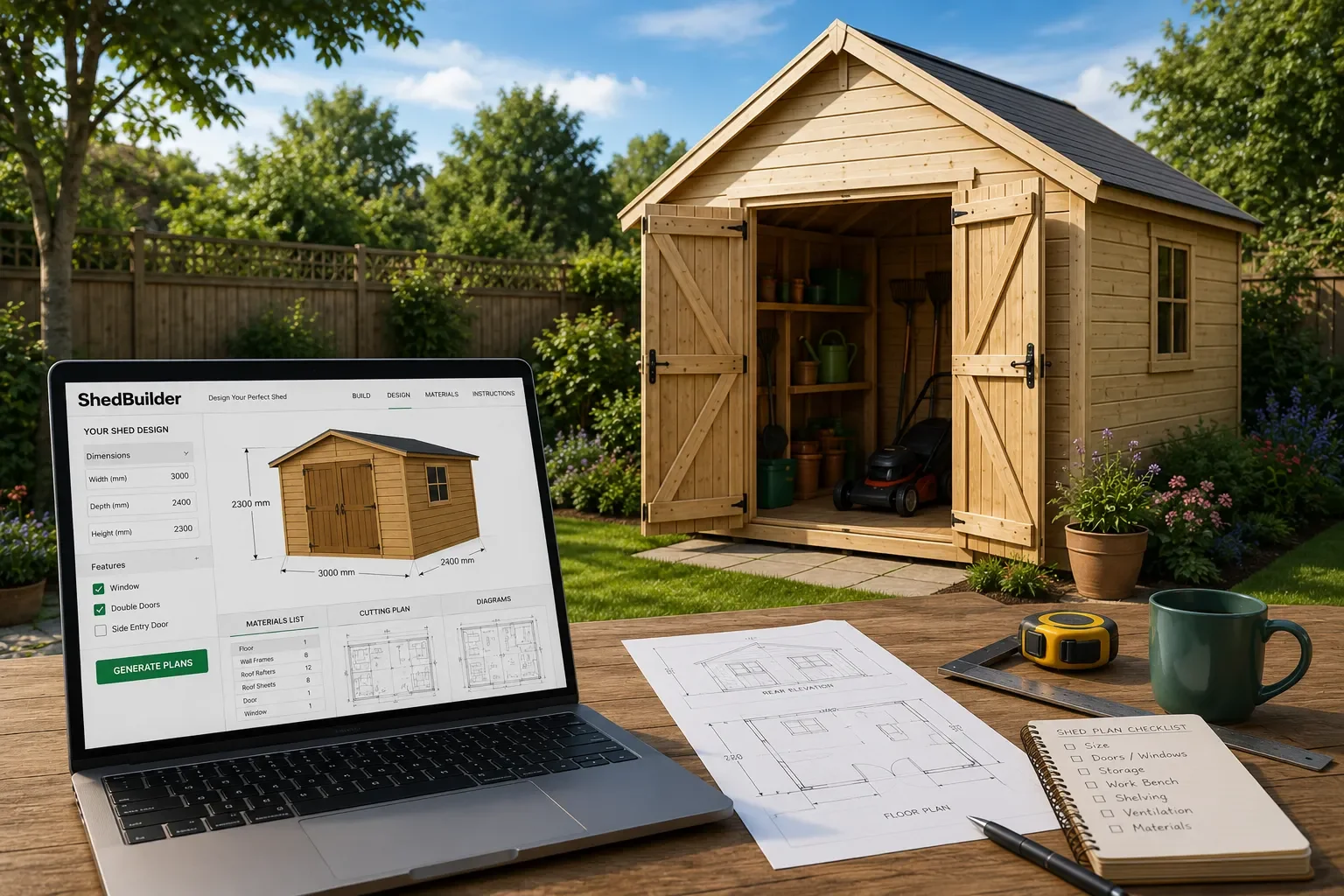
ShedBuilder's free online shed design tool lets you enter custom dimensions and generate materials lists, cutting plans, visual diagrams and step-by-step instructions. The site also offers printable PDF plans and says the tool is free to use without signing up.
One thing to keep in mind is that ShedBuilder is specifically written for UK gardens and regulations, so anyone building elsewhere should check their own local requirements before starting construction.
Don't Forget the Foundation
The shed design is only part of the project. You'll also need to think about the base.
A shed needs a stable, level foundation appropriate for its size and intended use. Planning the foundation at the same time as the shed helps ensure the finished building has a suitable base from the beginning.
It's also worth checking local building or planning requirements before construction, as requirements can vary depending on where you live.
Choose Your Shed Plans
Once you know the size, style and purpose of your shed, the next step is finding plans that give you enough information to build it properly.
At The Shed Nerd, we're building a collection of shed plans and DIY resources to help builders find the information they need before starting their projects.
If you're planning a 12x12 shed, take a look at our 12x12 Shed Plans page for detailed plans, blueprints, step-by-step instructions, and materials information.
Plan First, Build With Confidence
The best shed projects start with good planning.
Take the time to measure your space, decide what you'll use the shed for, choose a practical layout and work out the details before you buy your materials. A little planning at the beginning can make the building process much easier and help you end up with a shed that works for you for years to come.